Harry Gural has lived in his rent-controlled building on Connecticut Avenue NW for years, watching the elevators break down again and again without a fix in sight. This year he got a different kind of notice: his landlord told him the building no longer carries Tenant Opportunity to Purchase Act rights, citing a provision of DC's new RENTAL Act. Gural's tenant association is fighting that claim right now, and DC housing reporters at The 51st and SpotlightDC found his situation is not unusual. Landlords across the city are testing the edges of a law that took effect on December 31, 2025, and DHCD's own verification of exemption claims has turned out to be thin enough that questionable exemptions are already piling up.
Gural's fight is about the RENTAL Act's new-construction exemption, which doesn't apply to most rowhouses. But the enforcement gap he's exposing runs through the exemption that actually matters to a much larger group of Northwest DC sellers: the one covering two-to-four unit buildings, which describes an enormous share of the rowhouse stock in Petworth, Columbia Heights, Bloomingdale, and Park View.
Here's the claim worth sitting with before you list a tenant-occupied property in Northwest DC: whether TOPA applies to your sale in the old, slower way, the new, exempt way, or a version that gets contested somewhere in between depends on how your property is classified in DC's records, not on how many people happen to live in it. And because the agency responsible for checking those classifications has admitted its own review process is limited, getting that classification wrong has become the newest way a Northwest DC closing stalls.
Three different properties, three different rules
Before the RENTAL Act, DC already had a carve-out that matters here. Since 2018, a true single-family home occupied by an owner who also rents out a basement or accessory unit has been exempt from giving that tenant a purchase right. The owner still owes notice, delivered within three calendar days of receiving an offer to sell, sent to the tenant, the Department of Housing and Community Development, and the Office of the Tenant Advocate. That's a paperwork step, not a months-long process.
What changed on December 31, 2025 is a different, bigger category: buildings recorded as having two to four separate rental units, typically a rowhouse that's been converted into stacked apartments with no owner living on site. Before the RENTAL Act, this was the classic slow lane of DC real estate. Sellers had to issue a formal offer of sale, and tenants had time to organize and exercise, negotiate, or assign their purchase rights. Now, most of these buildings are exempt outright, unless the property is owned in majority by a business corporation, or the individual seller already owns more than two rental properties in the District.
| Question | Before Dec. 31, 2025 | After Dec. 31, 2025 |
|---|---|---|
| Does a 2-4 unit building trigger full tenant purchase rights? | Yes, in nearly all cases | No, unless owned in majority by a corporation, or by an individual who owns more than two DC rental properties |
| Is any notice still required for an exempt sale? | N/A | Yes, a Notice of Transfer, even though no purchase right attaches |
| Can tenants challenge the exemption? | N/A | Yes, tenants have 45 days after receiving the Notice of Transfer to register a tenant association and contest it |
The third category is anything with five or more units, which stays under the full TOPA process unless the building received its certificate of occupancy within the last 15 years.
None of this is optional reading if you own a converted duplex or triplex in one of these neighborhoods. It's the difference between a closing that moves on your timeline and one that doesn't.
The exemption is where the fight moved, not away from
The RENTAL Act's supporters framed these exemptions as relief for small landlords and long-time owners who found the old TOPA process expensive and unpredictable. Housing policy analysts at the Urban Institute had noted that two-to-four unit buildings generated more TOPA sale notices every year than large buildings did, so this group had the most to gain from simplification.
What's actually happened, according to the July 2026 reporting from The 51st, is that DHCD's process for confirming an exemption claim is minimal enough that some sellers are labeling renovated, older, rent-controlled buildings as new construction to slip through an exemption they don't qualify for. A DC official identified in that reporting as Cohn described some of the exemption notices landlords are sending tenants as containing "wild characterizations of the actual law." A DC real estate and title attorney, Kevin Bayly, put the shift in plainer terms: with the old rules, "you may have liked it or not liked it, but you knew how it worked."
That's the trade a Northwest DC seller is actually making right now. Under the old regime, TOPA was slow and rigid, but a title company and an agent who understood it could tell you almost exactly how long it would take and what it would cost. Under the new regime, a qualifying seller can, in theory, skip that timeline entirely. But if the exemption notice is worded wrong, misdates the certificate of occupancy, or misjudges the ownership test, a tenant association now has a real, live 45-day window to register and contest it. You don't find out whether your shortcut held until someone tests it.
Why this lands hardest on the classic Northwest DC rowhouse
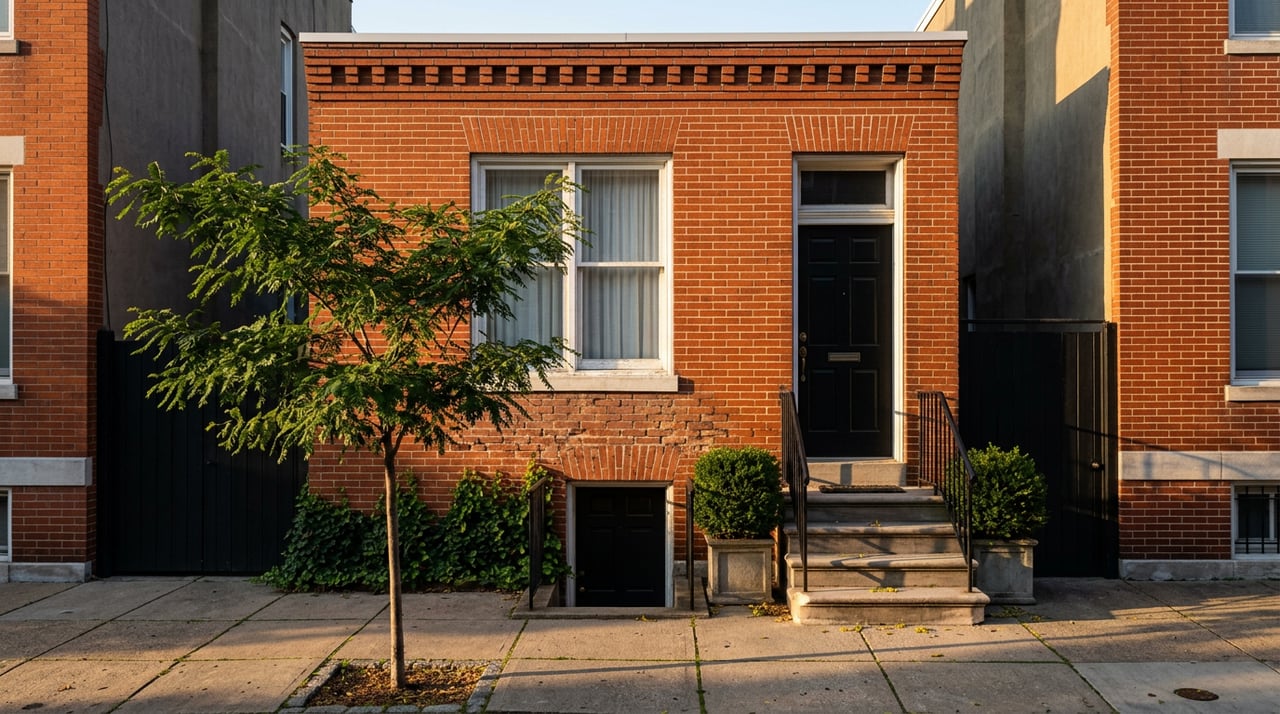
The English basement rental has been part of Petworth, Columbia Heights, and Bloomingdale rowhouse life for a century. Two versions of that setup exist side by side on the same block, and they now sit under two different legal regimes.
If you live upstairs and rent the basement unit, you're the 2018 exemption: notice only, no purchase right, a fast process as long as the paperwork goes to the right three parties in the right window. If your rowhouse was converted into two or three separately rented units with no owner on site, and you personally own two or fewer rental properties in DC and aren't operating through a corporation, you're likely the new 2-4 unit exemption. Either way, you're exempt from the slow version of TOPA. Neither of those facts, though, excuses you from sending correct, well-documented notice, and neither one protects you if DHCD or a tenant association later disputes how your building is classified.
This isn't a rare edge case in this part of the city. Analysis from the Urban Institute done while the RENTAL Act was being debated found that two-to-four unit buildings make up roughly two-thirds of all multifamily rental properties citywide, and that Ward 5, home to Bloomingdale, has the largest concentration of them. Ward 4, where Petworth sits, actually had fewer formally recorded 2-4 unit rental buildings relative to its overall multifamily stock, a reminder that plenty of Petworth's rental basements are legally single-family accommodations under the 2018 rule rather than the newer 2-4 unit exemption. The point isn't which ward has more of one type. It's that both regimes are common on the same blocks, and confusing one for the other is an easy, expensive mistake.
The paperwork gap that's already sitting on some titles
Owners of buildings that qualified for a TOPA exemption once the RENTAL Act took effect had a deadline: written notice to existing tenants confirming the exemption, due by March 31, 2026. That date has already passed. If you own a qualifying rowhouse in Northwest DC and never sent that notice, you have a compliance gap on your property before you've had a single showing.
Even for a clean exemption, the transaction isn't paperwork-free. A Notice of Transfer still has to go to tenants, and that notice starts a 45-day clock during which they can register a tenant association to challenge it. Legal analysts who track these deals note that legitimate Notices of Transfer are rarely contested, but rarely isn't the same as never, and a challenge that surfaces mid-contract is exactly the kind of delay a buyer's lender doesn't want to sit through.
Before you list a tenant-occupied rowhouse in Northwest DC
- Confirm how your property is actually classified in DC records: single-family with an accessory unit, or a recorded 2-4 unit housing accommodation. The label determines which exemption, if any, applies.
- Check your own ownership footprint. If you personally hold more than two rental properties in the District, or if title runs through a corporation, the 2-4 unit exemption may not apply to you even if the building physically qualifies.
- Confirm whether the March 31, 2026 tenant notification deadline applied to your property, and whether it was actually met.
- Send every notice, exempt or not, by trackable delivery to the tenant, DHCD, and the Office of the Tenant Advocate on the same day. Keep the receipts.
- Assume a Notice of Transfer is still required even if you believe you're fully exempt, and build the 45-day contest window into your closing timeline rather than treating exemption as a fast pass.
- Work with a title company and an agent who read the RENTAL Act's exemptions the same way DHCD's enforcement gap has made them contestable, not the way a summary blog post makes them sound settled.
A few questions worth asking before you sign a listing agreement
If my basement tenant has lived there for years, does that change anything? Not under either exemption. Length of tenancy affects negotiation and relocation conversations if TOPA does apply, but it doesn't change whether your building qualifies for an exemption in the first place.
Can I just tell my tenant the building is exempt and move forward? You can, but the Notice of Transfer requirement and the 45-day contest window exist regardless of how confident you are in your own classification. Skipping the formal notice is the fastest way to invite exactly the kind of challenge this piece describes.
Does this affect a straightforward owner-occupied sale with no tenants at all? No. None of this applies if there's no tenant on the lease at the time of sale. This is entirely a tenant-occupied property question.
Selling a tenant-occupied rowhouse in Petworth, Columbia Heights, Bloomingdale, or anywhere else in Northwest DC now hinges on a classification question that DC's own enforcement hasn't fully caught up to. Getting it right before you list is worth more than a fast timeline. RKL Properties works through this exact paperwork with sellers across the District before a property ever hits the market. Let's Connect.