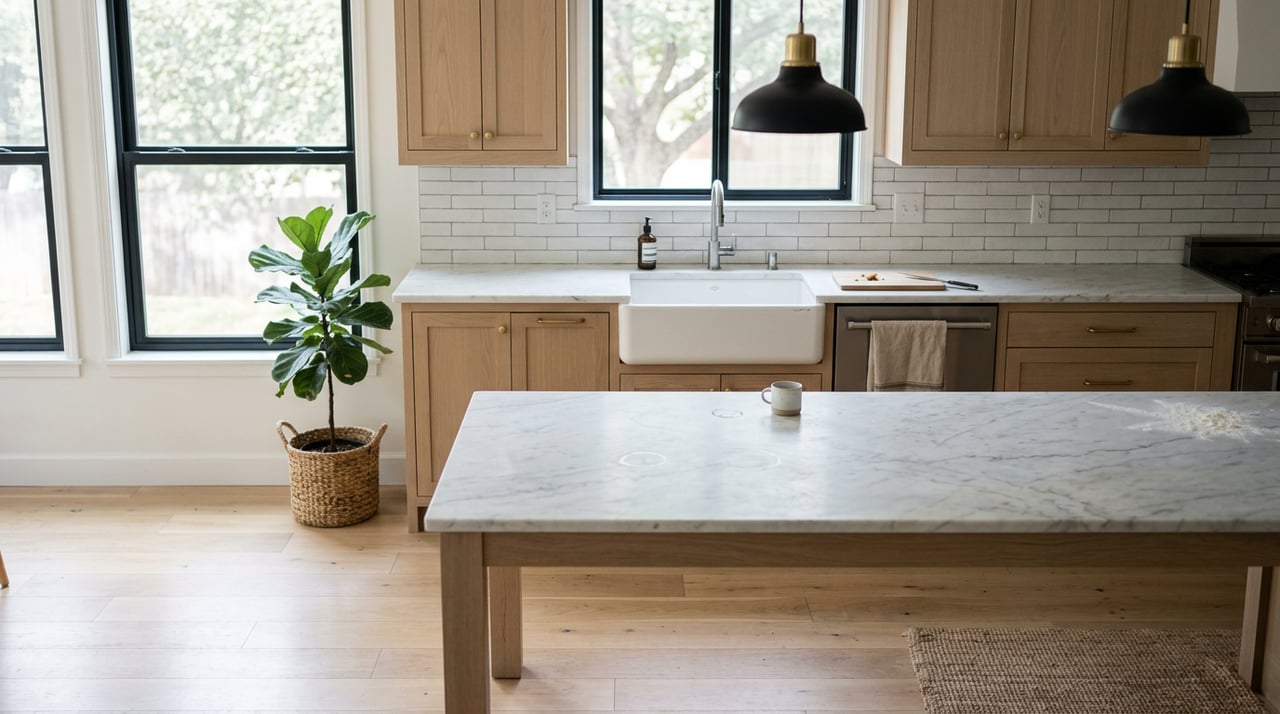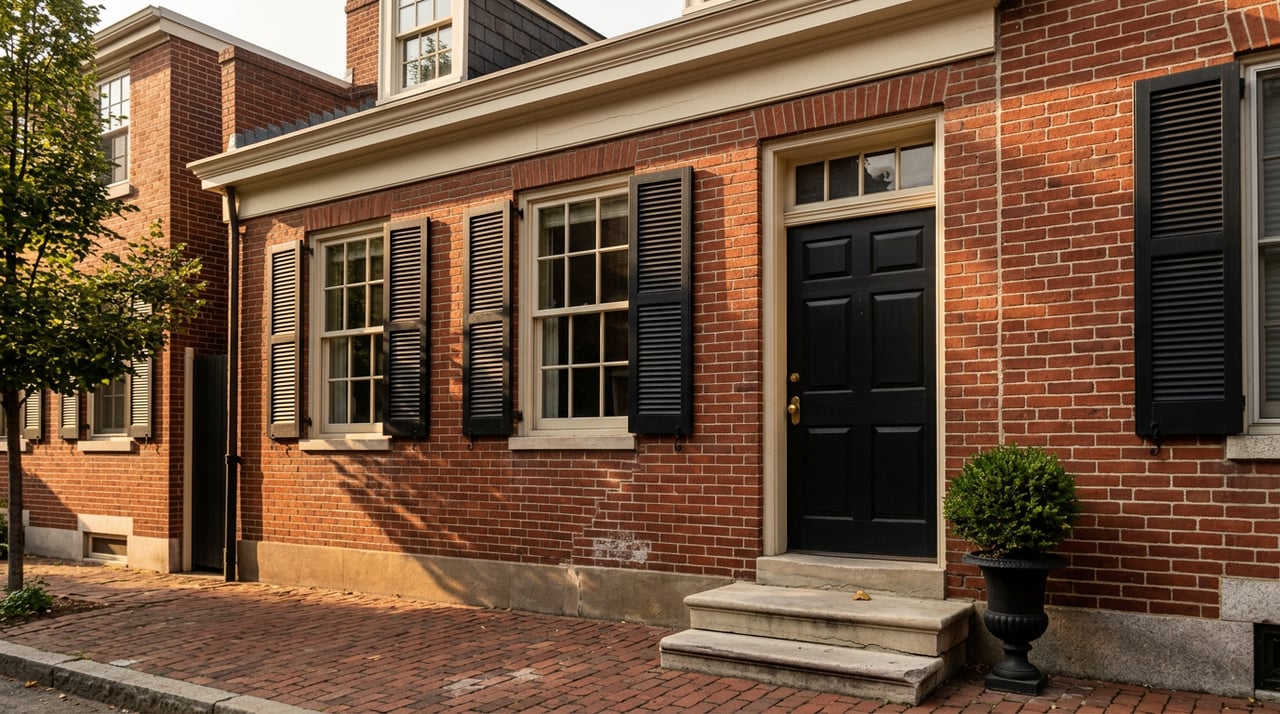
The seller's disclosure form is clean. The inspection came back with nothing alarming. The listing photos show a deck, a window unit tucked discreetly into a side wall, maybe a Tesla charger mounted near the driveway. Everything about the house says move-in ready.
None of that tells you who approved it, or whether anyone did.
In Old Town Alexandria, buying a historic home means buying more than brick and square footage. You are buying into a regulatory relationship with the City that started decades before you signed anything and does not reset when the deed changes hands. The Board of Architectural Review, known locally as the BAR, holds binding authority over exterior work on properties inside the Old and Historic Alexandria District and the Parker-Gray Historic District. Not advisory. Not a suggestion for owners who want to keep the neighborhood association happy. Binding. And because many of these rowhouses have passed through several owners over a span of 150 to 200 years, the work you are inheriting was not necessarily approved by the person selling you the house. It might not have been approved by anyone.
That is the part first-time historic buyers tend to miss, and it is the reason this particular home purchase deserves a slower, more specific kind of due diligence than a comparable house in a non-historic Alexandria neighborhood.
The board reviews the house's history, not just your plans
Alexandria's Old and Historic District was established in 1946. The city maintains seven National Register Historic Districts in total, but only two, Old and Historic Alexandria and Parker-Gray, are locally regulated through the BAR. Certain individually designated properties, labeled One Hundred-Year-Old Buildings by City Council ordinance, fall under the same review even outside those boundaries.
Here is what that review actually covers. According to the City of Alexandria's own preservation guidance, a Certificate of Appropriateness is required for new construction and exterior alterations that are visible from a public right of way. Interior work does not require BAR approval at all. A Permit to Demolish is required for demolition or capsulation of more than 25 square feet of material, regardless of whether it can be seen from the street.
So a new kitchen island, refinished floors, or updated wiring inside the walls: none of that touches the BAR. Replace a window, add a rooftop deck, install a shed, or change the shutters, and you are now in Certificate of Appropriateness territory, whether the change happened last month or a decade before you made an offer.
Why the seller in front of you isn't always the one who did the work
Rowhouses in Old Town have often changed hands many times. Each transaction is a chance for a prior owner to have swapped a window, closed in a porch, or added a rear deck without ever filing for a Certificate of Appropriateness, sometimes because they didn't know they needed one, sometimes because they hoped no one would check. Unpermitted exterior work is common in properties with this kind of ownership history, and it does not disappear when the house is resold. It shows up later, in an appraisal that flags an unrecorded addition, in an insurance claim that gets denied because a structure was never permitted, or in a City records search a title company runs before closing.
Virginia's disclosure framework leans toward buyer beware rather than the more proactive standard used in DC. That makes your home inspection contingency and your own records research the primary tools protecting you, not the seller's paperwork. A seller may disclose in good faith and still be unaware that a change made two or three owners back was never brought into compliance.
Before you write an offer on a historic Old Town property, it is worth asking your agent to pull the permit and BAR application history for that specific address through the City's records, not just relying on what the seller's disclosure statement says. If a deck, addition, or window replacement shows up in photos or in the property description but has no matching Certificate of Appropriateness on file, that is a conversation to have before closing, not after.
The rulebook is being rewritten this month
Here is where timing matters if you are searching for a historic home in Old Town Alexandria right now. The city's Design Guidelines for both historic districts were originally developed in 1993, and they have not had a comprehensive rewrite since. That changes this month. The BAR Design Guidelines Committee released draft chapters for public review on August 5, 2026, opened a public comment period running through September 2, 2026, and is holding a community meeting on Wednesday, August 19, from 7 to 9 p.m. at the Nannie J. Lee Recreation Center to walk through eleven updated chapters.
The subjects under revision are exactly the ones that trip up new owners: electric vehicle chargers, HVAC equipment, security features, exterior lighting, porches, decks, and rooftop additions. And the draft treats the two historic districts differently in ways worth knowing before you buy in one or the other.
Under the draft rules, a deck that is not visible from the street needs no review at all, but anything visible, along with any penthouse or stair structure, goes to the board. Composite decking is considered inappropriate on Early Buildings, and unpainted pressure-treated wood and vinyl are discouraged throughout. For HVAC, the two districts split. In the Old and Historic Alexandria District, every rooftop HVAC installation goes to the full board for review. In Parker-Gray, staff can approve a rooftop unit administratively if it sits at least 15 feet behind the front facade, reserving board hearings for anything closer to the street. Parker-Gray also lets staff waive rooftop screening requirements on their own authority, while the Old Town chapter keeps that decision with the board. Window air conditioning units need no review anywhere. Small sheds and accessory structures up to 65 square feet and 8 feet tall can be approved by staff; anything larger requires a hearing.
EV chargers follow their own path. BAR staff can administratively approve a wall-mounted charger on a private property in either district as long as the number of charging stations does not exceed the number of allowed parking spaces. If a proposed installation does not meet that criteria, it needs a full BAR hearing before a building permit can even be requested.
None of this is settled yet. The draft chapters could shift based on the comment period feedback through September 2. But if you are under contract on a home in either district this fall, the guidance governing what you can add to that house, from a charger to a rooftop deck, is being finalized while you are moving in.
What this actually looks like at the timeline level
City guidance is consistent on how long approval takes once a project is ready to submit. Minor items that meet administrative criteria, ordinary maintenance, same-material replacements, and qualifying EV chargers, can be approved by staff in a matter of days to a few weeks. Anything that requires a full board hearing adds real time: hearings happen only on the first and third Wednesday of each month, except August, at City Hall, and the process from submission to decision typically runs four to eight weeks. Add design and documentation time, and a common exterior project, a window replacement or a small addition, usually takes two to four months from concept to permit in hand.
If your plans for the house involve any exterior change more significant than paint on already-painted trim, build that runway into your first year of ownership. It is not a formality you can skip by moving quickly.
Questions worth asking before you write the offer
- Has this property received a Certificate of Appropriateness for any visible exterior work shown in the listing photos or disclosed by the seller?
- Is the home in the Old and Historic Alexandria District or the Parker-Gray Historic District, or is it individually designated as a One Hundred-Year-Old Building? The answer changes which rules apply.
- If you plan to add an EV charger, rooftop deck, or HVAC unit, does the property have enough allowed parking spaces or setback distance to qualify for staff-level approval rather than a full hearing?
- Has the seller's title company or your agent pulled the City's permit history for the address, separate from the seller's own disclosure statement?
A quick FAQ
Does BAR review apply to interior renovations? No. Interior work, including kitchens, bathrooms, and structural changes not visible from a public street, does not require BAR approval. Only exterior alterations visible from a right of way, and any demolition over 25 square feet, fall under the board's authority.
What happens if I discover unpermitted exterior work after closing? You become responsible for it. That can mean seeking retroactive approval through the same Certificate of Appropriateness process, or removing and redoing the work to match current guidelines. Either path costs time and money you did not budget for at closing.
Should I wait until after the guideline rewrite is finalized to buy? The comment period runs through September 2, 2026, but the underlying BAR process, permits, Certificates of Appropriateness, and hearing schedule, is not going away regardless of how the specific chapters land. The safer approach is understanding the current rules and asking pointed questions about the property's own history, rather than waiting on a process with no fixed end date.
Old Town's historic districts are part of what makes these homes worth the premium. The brick, the streetscape, the fact that the house next door has looked roughly the same for a century, all of that is protected by the same review process that will govern your own plans. Knowing what you are actually agreeing to before you close is the difference between a smooth first year of ownership and an expensive surprise.
If you are searching for a historic home in Old Town Alexandria, or trying to understand what a specific address's BAR history looks like before you make an offer, RKL Properties can help you read the paper trail before it becomes your problem. Let's Connect.